
The “How” Matters: Federal Circuit Affirms §101 Invalidation of Web Conferencing Patent
In a fresh precedential ruling on January 22, 2026, the U.S. Court of Appeals for the Federal Circuit reinforced a difficult truth for software patent owners: describing a “cool result” is not the same as claiming a “technical solution.” The case, US Patent No. 7,679,637 LLC v. Google LLC,1 centers on the limits of what computers can “do” versus how they are “improved.”
Background
The dispute involved U.S. Patent No. 7,679,637 (“‘637 patent”), which covers a web conferencing system with “time-shifting” capabilities. Essentially, the patent described a way for participants to watch a live session asynchronously—pausing, rewinding, or slowing down the video and audio streams while the meeting was still in progress. The ‘637 patent owner sued Google, alleging that Google’s conferencing tools infringed these claims. Google moved to dismiss the case early (under Rule 12(b)(6)), arguing the patent was “abstract” and therefore patent ineligible under 35 U.S.C. § 101.
The Holding: Result-Oriented Generalities
The Federal Circuit affirmed. The court’s rationale focused on two major failings of the patent:
- Abstraction: The panel held that the claims were directed to the abstract idea of “allowing asynchronous review of presentations.” While the patent owner argued the claims were a specific technical improvement, the court disagreed, noting that “time-shifting” is a long-standing concept (think VCRs or DVRs) simply applied to a new environment (web conferencing).
- Lack of “How-To”: A critical factor in the ruling was the “result-oriented” nature of the claims. The court noted that the patent described what the system does (decoupling data streams to allow playback) but failed to provide a specific, technical how that improved the computer’s functionality.
[The claims] were “recited at such a level of result-oriented generality that those claims amounted to a mere implementation of an abstract idea.”
Moore, C.J. (quoting Hawk Tech. Sys., LLC v. Castle Retail, LLC)2
The § 101 Legal Framework: The Alice/Mayo Test
This case is the latest chapter in the ongoing saga of Section 101 patent eligibility, which is governed by the two-step Alice/Mayo framework. Under Step 1, the panel found that asynchronous playback is an abstract idea. Further, under Step 2, the panel found using generic computer components (e.g., servers, clients, storage) to perform asynchronous playback did not make itpatentable*.*
Why This Matters for Tech Companies
This ruling is a reminder that the Federal Circuit is increasingly skeptical of “functional” software claims. If a patent simply says, *“*a system that allows a user to [X],” without explaining the specific technical architecture or algorithm that makes [X] possible in a new way, it is highly vulnerable to a motion to dismiss.
A few quick tips for drafting result-oriented claims that will pass the §101 muster include:
1. Shift from “What” to “How”
The most common pitfall is drafting result-oriented claims. If your claim reads like a user’s wish list, it will likely be invalidated.
- Avoid: “A system for allowing a user to asynchronously review a live presentation.” (This is a result).
- Adopt: “A system that utilizes a dual-buffer synchronization protocol to decouple data packets from a live stream, allowing for independent playback speed adjustments without terminating the primary stream connection.” (This is a technical mechanism).
2. Anchor the “Technical Improvement” in the Specification
To survive Step 1 of the Alice/Mayo test, the patent must be “directed to” a technological improvement, not just an abstract concept performed on a computer.
- Identify the Problem: Explicitly describe a technical problem in the specification (e.g., “Network latency causes packet loss during high-speed playback”).
- Link to the Solution: Ensure the claims reflect the specific technical steps that solve that problem. If the improvement is “faster processing,” explain why it’s faster (e.g., a new data structure or a specific algorithm).
For more information, please contact Yonaxis I.P. Law Group.
Footnotes
-
___F.4th___ Case No. 24-1520 (Fed. Cir. January 22, 2026). ↩
-
60 F.4th 1349, 1358 (Fed. Cir. 2023). ↩
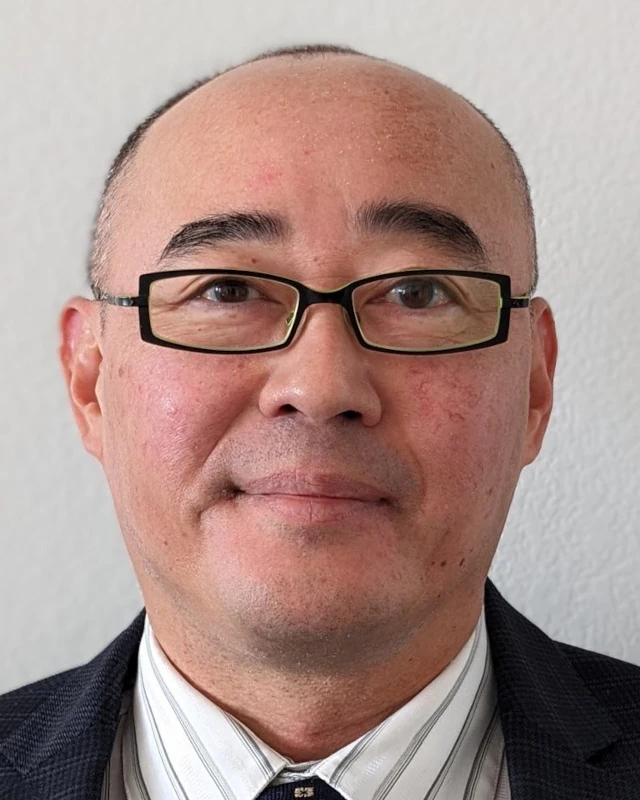
Brent T. Yonehara
Founder & Patent Attorney
Founder Brent Yonehara brings over 20 years of strategic intellectual property experience to every client engagement. His distinguished career spans AmLaw 100 firms, specialized boutique I.P. practices, cutting-edge technology companies, and leading research universities.
More About Brent